Japan launches MMX mission to bring samples back from Mars' moon Phobos
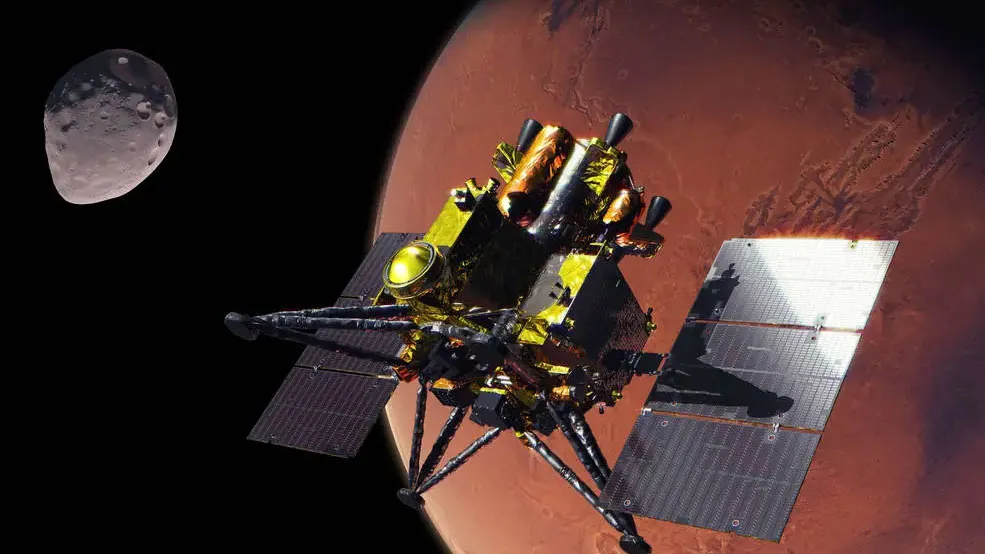
Summary
Japan launched its JAXA-led MMX mission toward Mars' moons, Phobos and Deimos, to collect surface material and return it to Earth. Channel NewsAsia reports the spacecraft is due to arrive near Mars around August next year and orbit Phobos. Space.com reports the mission could help resolve competing theories about how the two moons originated, and that it would be the first spacecraft to return to Earth from orbit of Mars. Phys.org says the samples could help unlock the origins of the solar system and life on Earth, and WIRED says the soil could unlock new clues about the solar system's history. CNET reports NASA contributed to the mission. Reports differ on timing: Space.com said the launch was scheduled for October 19, while the Financial Times reports the voyage took off early Tuesday morning Japan time.
Timeline
Space.com
Source ↗Space.com reports that Japan's MMX mission could help resolve competing theories about the origins of Phobos and Deimos and would be the first spacecraft to return to Earth from orbit of Mars.
Phys.org
Source ↗Phys.org reports that Japanese scientists are readying a mission to Mars' moons to retrieve samples that could help unlock the origins of the solar system and life on Earth, in what aims to be the first round trip to the Martian region.
Space.com
Source ↗Space.com reports that Japan will launch its MMX sample-return mission to Phobos today, October 19, and that readers can watch the launch live.
CNET
Source ↗CNET reports that Japan has launched a first-of-its-kind mission to Mars' moons to bring samples home, with NASA contributing, and that it may help show how the solar system formed.
WIRED
Source ↗WIRED reports that JAXA is leading an international mission to reach Mars' Phobos moon and bring soil back to Earth, which could unlock new clues about the history of the solar system if successful.
Channel NewsAsia
Source ↗Channel NewsAsia reports that the probe is on its way to Mars and is due to arrive near Mars around August next year, where it will orbit the moon Phobos.
Financial Times
Source ↗The Financial Times reports that the voyage took off early Tuesday morning Japan time and will be watched for further potential signs of life on the Red Planet.
Comments
No comments yet.
to like and comment.